Complete Guide to Mattress Foaming Machine & PU Foam Production Solutions
From Automatic Foam Production Lines to Energy-Efficient Manufacturing Systems
Are you struggling with inconsistent foam quality, high production costs, or inefficient manufacturing processes? The foam production industry faces unprecedented challenges in 2025: rising energy costs, strict quality requirements, and the need for sustainable manufacturing solutions. Whether you're producing mattresses, sofa cushions, or furniture foam, selecting the right mattress foaming machine and PU foam production equipment is critical to your business success.
Modern automatic mattress foaming machines have revolutionized the furniture and bedding industry, offering precise density control, consistent quality, and remarkable energy efficiency. This comprehensive guide explores everything you need to know about foam production technology, from PU foam pouring lines to continuous foam production equipment, helping you make informed decisions for your manufacturing facility.
Understanding PU Foam Pouring Line Technology
The PU foam pouring line represents the backbone of modern foam manufacturing, combining precision engineering with advanced chemical processing. This integrated system controls every aspect of polyurethane foam production, from raw material mixing to final curing.
Foam Mixing and Metering System: The Heart of Quality Control
At the core of any efficient foam mixing and metering system lies precision technology that determines the final product quality. Modern systems utilize advanced sensors and computerized controls to maintain exact chemical ratios, ensuring consistent foam properties across every production batch.
Key Components of Modern Mixing Systems:
- High-precision metering pumps - Accuracy within ±1% for polyol, isocyanate, and additives
- Temperature control systems - Maintaining optimal chemical reaction conditions (20-25°C)
- Automated cleaning cycles - Preventing cross-contamination between formulations
- Real-time monitoring dashboards - Instant feedback on mixing parameters
PU Foam Density Control Technology: Achieving Perfect Consistency
PU foam density control technology has evolved dramatically, enabling manufacturers to produce foam ranging from ultra-soft (12-15 kg/m³) to high-resilience grades (50+ kg/m³) with remarkable precision. This technology directly impacts product performance, comfort, and durability.
| Foam Density Range |
Applications |
Key Characteristics |
Control Requirements |
| 12-20 kg/m³ |
Budget mattresses, packaging |
Soft, economical |
Basic metering accuracy |
| 20-35 kg/m³ |
Standard mattresses, cushions |
Balanced comfort & support |
±2% density tolerance |
| 35-50 kg/m³ |
Premium furniture, automotive |
High resilience, durable |
±1% density tolerance |
| 50+ kg/m³ |
Specialized industrial applications |
Extreme durability |
Advanced control systems |
Energy-Efficient PU Foaming Plant: Sustainable Manufacturing Solutions
The shift toward energy-efficient PU foaming plants reflects both economic necessity and environmental responsibility. Modern facilities can reduce energy consumption by 40-60% compared to legacy systems through intelligent heat recovery, variable-speed drives, and optimized curing processes.
💡 Are you concerned about rising energy costs eating into your profit margins? Modern energy-efficient systems typically achieve ROI within 18-24 months through reduced utility bills alone.
Automatic Mattress Foaming Machine: Complete Production Automation
The automatic mattress foaming machine represents the pinnacle of foam manufacturing technology, integrating multiple production stages into a seamless, computer-controlled workflow. These systems dramatically reduce labor costs while improving consistency and throughput.
High-Pressure vs Low-Pressure Foaming Equipment: Making the Right Choice
Understanding the distinction between high-pressure PU foaming machines and low-pressure foaming equipment is crucial for optimizing your production line. Each technology offers unique advantages depending on your specific manufacturing requirements.
| Feature |
High-Pressure Systems |
Low-Pressure Systems |
| Mixing Pressure |
140-220 bar |
5-15 bar |
| Best For |
Small parts, precise applications |
Large blocks, continuous production |
| Mixing Quality |
Excellent, very fine cell structure |
Good, suitable for most applications |
| Initial Investment |
Higher (€150,000-500,000) |
Moderate (€80,000-200,000) |
| Maintenance |
More frequent, specialized |
Lower frequency, simpler |
| Output Flexibility |
Medium to small batches |
Continuous high-volume production |
Continuous Foam Production Equipment: Maximizing Output Efficiency
Continuous foam production equipment enables non-stop manufacturing operations, ideal for high-volume mattress and furniture foam production. These systems feature horizontal conveyor lines where foam continuously rises and cures while moving through temperature-controlled zones.
🏭 Real-World Success Stories: Our Client Solutions
Discover how leading manufacturers worldwide have transformed their production capabilities with our advanced foam machinery solutions:
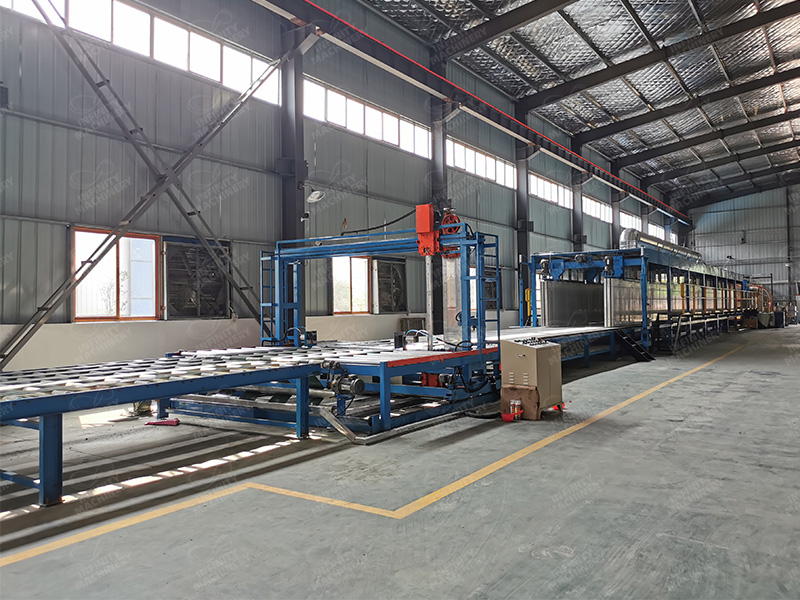
Horizontal Automatic Continuous Foam Foaming Plant
High-capacity production line delivering consistent quality for mattress manufacturing with automated density control.
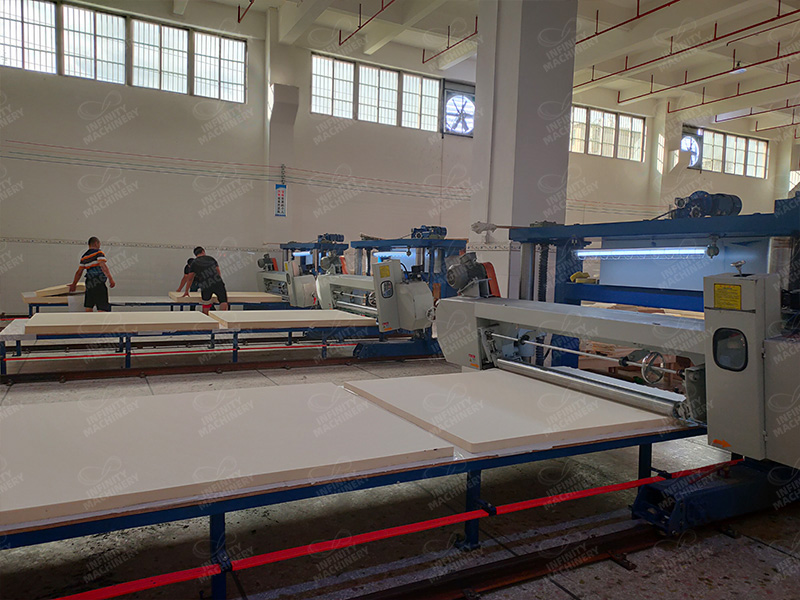
The Foam Mattress Making Process
Complete workflow from raw materials to finished products, showcasing integrated production efficiency.
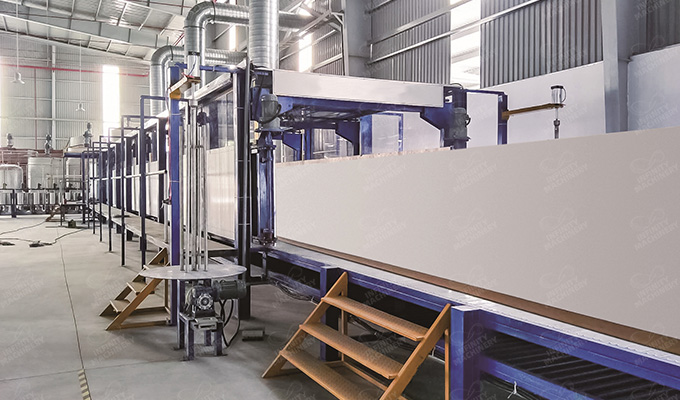
Full Automatic Continuous Horizontal PU Foaming Plant
State-of-the-art automation reducing labor costs by 65% while improving output quality and consistency.
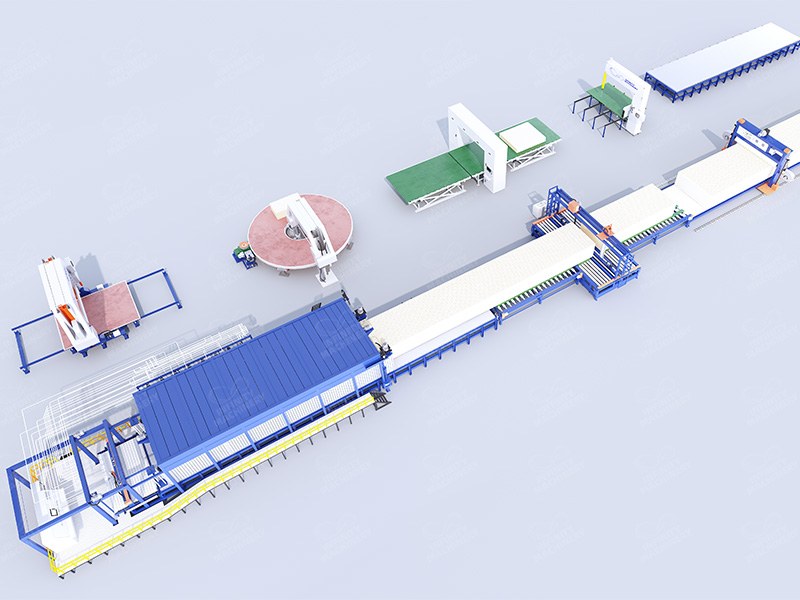
One-Stop Foam Production Line Solutions
Comprehensive turnkey solution integrating mixing, pouring, cutting, and curing for maximum efficiency.
Industrial Foam Reactor System: Advanced Chemical Processing
The industrial foam reactor system manages the complex chemical reactions that transform liquid polyurethane components into solid foam. Modern reactors incorporate sophisticated temperature management, pressure control, and catalyst dosing to optimize reaction efficiency and foam properties.
Sofa Cushion Foam Production Line: Specialized Furniture Manufacturing
The sofa cushion foam production line requires specialized equipment designed for producing shaped foam components with precise dimensional tolerances. Unlike mattress production, furniture foam manufacturing often involves molding technologies and multiple density layering.
Furniture Foam Making Process: From Concept to Cushion
The furniture foam making process encompasses several critical stages:
- Formulation Development - Creating custom foam recipes matching specific comfort and durability requirements
- Mold Preparation - Preparing aluminum or steel molds with release agents
- Precision Pouring - Injecting metered foam mixture into molds
- Controlled Curing - Managing temperature profiles for optimal cell structure
- Demolding and Trimming - Extracting finished parts and removing flash
- Quality Inspection - Verifying density, hardness, and dimensional accuracy
Furniture Foam Recycling Solution: Sustainable Manufacturing Practices
Implementing a furniture foam recycling solution addresses both environmental concerns and cost reduction. Modern recycling systems can recover up to 95% of foam waste, grinding it into particles for use as carpet underlay, insulation, or rebonded foam products.
⚠️ Common Misconception:
"All foam scraps are worthless waste." Reality: Quality foam waste has significant value in recycling markets, with clean PU foam scraps commanding €200-400 per ton. Implementing a recycling program can generate additional revenue while reducing disposal costs.
Advanced Technologies in Modern Foam Production
Mattress Foam Chemical Formulation: The Science Behind Comfort
Mattress foam chemical formulation represents a sophisticated balance of polyols, isocyanates, catalysts, surfactants, and blowing agents. Each component plays a critical role in determining the foam's final characteristics:
- Polyol Selection - Determines softness, resilience, and breathability
- Isocyanate Ratio - Controls foam hardness and durability
- Catalyst Systems - Manages reaction speed and cell structure
- Surfactants - Ensures uniform cell size and foam stability
- Blowing Agents - Creates foam expansion (water-based or chemical)
Flexible Polyurethane Foaming Machine: Versatility in Production
The flexible polyurethane foaming machine offers unmatched versatility, capable of producing foam ranging from ultra-soft (10 kg/m³) to semi-rigid (100+ kg/m³) densities. This adaptability makes these machines ideal for manufacturers serving diverse markets from bedding to automotive to packaging.
Foam Block Cutting and Curing Line: Precision Finishing
The foam block cutting and curing line transforms large foam blocks into precise slabs and custom shapes. Modern cutting systems utilize:
- Horizontal band saws - For accurate thickness slicing (±0.5mm tolerance)
- Vertical band saws - For splitting blocks lengthwise
- Contouring machines - Creating shaped profiles for specialty products
- CNC cutting systems - Automated complex shape production
💡 How do you ensure consistent foam quality across thousands of mattresses? Advanced cutting and curing systems with integrated quality monitoring provide real-time feedback, catching defects before products reach customers.
Comprehensive Strengths and Limitations Analysis
✅ Key Strengths of Modern Foam Production Systems
- Exceptional Quality Consistency - Computerized controls maintain precise formulation ratios, eliminating batch-to-batch variations that plague manual systems
- Dramatic Labor Cost Reduction - Automated systems reduce staffing requirements by 60-70%, with typical ROI achieved within 2-3 years
- Superior Energy Efficiency - Modern heat recovery systems and variable-speed equipment cut energy costs by 40-50% compared to legacy machinery
- Scalable Production Capacity - Easily adjust output from pilot batches to full production without equipment changes
- Enhanced Safety Features - Enclosed systems minimize worker exposure to chemicals while automated monitoring prevents hazardous conditions
⚠️ Important Considerations and Improvement Areas
- Significant Capital Investment - Complete production lines require €200,000-€1,000,000+ initial investment, challenging for small manufacturers. Solution: Consider phased implementation or equipment leasing programs.
- Technical Expertise Requirements - Operating advanced systems demands trained personnel with chemical engineering knowledge and troubleshooting skills. Solution: Partner with suppliers offering comprehensive training programs.
- Maintenance Complexity - High-precision metering systems and computerized controls require specialized maintenance protocols. Solution: Establish preventive maintenance schedules and maintain relationships with expert technicians.
Essential Purchase Considerations and Selection Checklist
💡 What factors should dominate your equipment selection process? Beyond price, consider total cost of ownership, supplier support, spare parts availability, and upgrade pathways.
📋 Equipment Selection Checklist
- ✓Production Volume Requirements - Match equipment capacity to current needs plus 30-50% growth buffer
- ✓Foam Density Range - Ensure machinery handles your entire product portfolio (soft to firm grades)
- ✓Floor Space Constraints - Measure available space including clearance for maintenance access
- ✓Utility Infrastructure - Verify electrical capacity, compressed air supply, and water cooling availability
- ✓Supplier Reputation - Research customer testimonials, site visits, and industry references
- ✓Training and Support - Confirm comprehensive operator training and responsive technical support
- ✓Spare Parts Availability - Ensure critical components available with <48-hour delivery
- ✓Upgrade Pathways - Verify equipment can be expanded or enhanced as business grows
- ✓Compliance Certifications - Confirm CE, ISO, and relevant safety standards compliance
- ✓Warranty Terms - Evaluate coverage duration, included services, and exclusions
💡 Expert Purchasing Advice
Don't make the costly mistake of selecting equipment based solely on purchase price. A €50,000 cheaper system that consumes 30% more energy will cost you significantly more over its 10-15 year lifespan. Always calculate total cost of ownership including energy, maintenance, labor, and chemical efficiency.
💡 Should you prioritize automation or flexibility in your first foam production system? For most manufacturers, starting with semi-automated systems offering manual override capabilities provides the ideal balance, allowing operators to develop expertise while maintaining production consistency.
Ready to Transform Your Foam Production Capabilities?
Our team of foam production specialists is ready to help you select the perfect equipment configuration for your specific needs. With over 15 years of industry experience and successful installations worldwide, we provide comprehensive turnkey solutions from initial planning through installation and ongoing support.
Get a customized equipment proposal within 24 hours • Free production line design consultation • No-obligation quotation
Frequently Asked Questions About Foam Production Equipment
Q1: What is the typical production capacity of an automatic mattress foaming machine?
Modern automatic mattress foaming machines range from 50-500 kg/minute output depending on configuration. A mid-range continuous line produces approximately 150-200 kg/min, equivalent to 30-40 queen-size mattress cores per hour. Capacity depends on foam density, block size, and curing time requirements. For high-volume manufacturers, multiple parallel lines can scale capacity to 1,000+ mattresses daily.
Q2: How long does it take to achieve ROI on a complete PU foam production line?
ROI typically ranges from 18-36 months depending on several factors: production volume, labor cost savings, energy efficiency gains, and raw material optimization. Manufacturers operating two shifts daily usually achieve ROI within 24 months. The calculation should include direct savings (reduced labor, lower energy costs) and indirect benefits (improved quality consistency, reduced waste, higher production capacity enabling revenue growth).
Q3: What maintenance is required for foam mixing and metering systems?
Preventive maintenance is crucial for metering system longevity. Daily tasks include checking pump seals for leaks and cleaning mixing heads. Weekly maintenance involves calibrating metering accuracy and inspecting hoses for wear. Monthly activities include filter replacements, pump lubrication, and system calibration verification. Major overhauls (pump rebuild, complete calibration) occur annually. Well-maintained systems operate reliably for 10-15 years, while neglected equipment may require major repairs within 3-5 years.
Q4: Can one foam production line handle multiple foam densities and formulations?
Yes, modern flexible polyurethane foaming machines excel at multi-formulation production. Quick-change systems allow density adjustments within 15-30 minutes by modifying chemical ratios and process parameters. Advanced systems store multiple recipes in computer memory, enabling one-button formulation changes. However, switching between vastly different formulations (e.g., soft mattress foam to high-density furniture foam) requires tank changes and thorough cleaning, typically requiring 2-4 hours transition time.
Q5: What environmental and safety considerations are critical for foam production facilities?
Foam production facilities must address several environmental and safety factors: Ventilation - Adequate exhaust systems removing isocyanate vapors and foam dust; Chemical Storage - Temperature-controlled storage for polyols and isocyanates with spill containment; Fire Safety - Foam is combustible, requiring sprinkler systems and fire-rated separation; Waste Management - Proper disposal or recycling of foam scraps and contaminated materials; Worker Protection - Personal protective equipment, chemical exposure monitoring, and safety training. Compliance with local environmental regulations and OSHA standards is mandatory.
Conclusion: Making the Strategic Investment in Foam Production Excellence
Selecting the right mattress foaming machine, sofa foaming machine, or comprehensive PU foam production equipment represents one of the most critical strategic decisions facing furniture and bedding manufacturers today. As we've explored throughout this guide, modern foam production technology offers unprecedented opportunities for quality improvement, cost reduction, and sustainable manufacturing practices.
The evolution from manual mixing operations to fully automated continuous foam production equipment has transformed the industry, enabling consistent quality that was impossible just a decade ago. Whether you're implementing your first automatic mattress foaming machine or upgrading an existing sofa cushion foam production line, the key success factors remain constant: thorough research, realistic capacity planning, comprehensive operator training, and partnership with experienced equipment suppliers.
Remember: The cheapest equipment is rarely the most economical choice over its operational lifetime. Focus on total cost of ownership, including energy efficiency, maintenance requirements, spare parts availability, and supplier support quality. A well-chosen foam production system will serve your business reliably for 15-20 years, making it one of the most important investments you'll make.
As the furniture and bedding industries continue evolving toward automation, sustainability, and precision manufacturing, investing in advanced PU foaming technology positions your business for long-term competitive advantage. The manufacturers who thrive in the coming decade will be those who recognized the strategic importance of production excellence and made the commitment to world-class equipment and processes.
Take the Next Step Toward Production Excellence
Don't let outdated equipment limit your business growth potential. Our foam production specialists are standing by to discuss your specific requirements, answer your technical questions, and develop a customized solution that perfectly matches your production needs and budget.
Contact us today for: Free production line assessment • Customized equipment recommendations • ROI analysis • Financing options consultation
Infinity Machinery - Your Partner in Foam Production Excellence
Delivering world-class PU foam production solutions to manufacturers worldwide since 2008

